





We invite you on a retrospective journey through nine decades of the twentieth century, following the traces of Lithuanian artists far beyond the borders of their homeland.
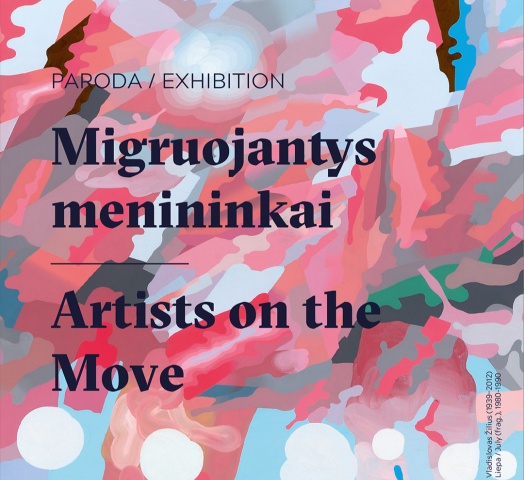

Although Kazimiera Zimblytė-Kazė (1933–1999) and Rose Lowder (b. 1941) lived and worked around the same time, the two artists never met. They were part of different contexts: Zimblytė spent most of her life in Soviet-occupied Lithuania, while Lowder has spent much of hers primarily in Western Europe. Their disciplines also diverge – Zimblytė is best known as a painter and Lowder continues to work in experimental cinema. Yet, despite their differing circumstances, the artists share a common ground: through abstract expression both ask how we see and experience the world. Three works by Kazė Zimblytė from the TARTLE collection have been lent for the exhibition.

The exhibition Forever Temporary is a dialogue between art history and the present, between then and now, between this and that. What does art history reveal about artworks and their viewers when we see it not merely as a succession of styles or eras, but as humanity’s ongoing effort to understand itself in the world? Each period brings its own context and visual language, yet all share a common thread: timeless existential questions around which creativity unfolds. TARTLE lent three artworks for this exhibition.
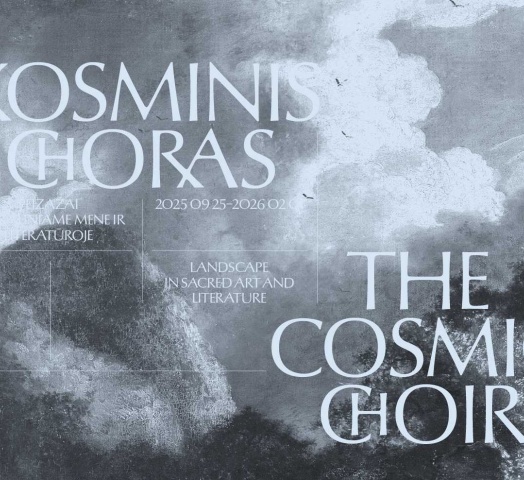
On 22th September an exhibition “The Cosmic Choir” was opened at the Church Heritage Museum.
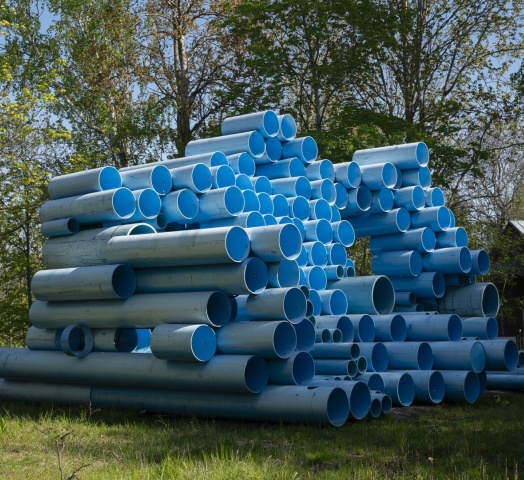
From June 8 to September 21, 2025, you can visit Gediminas and Nomeda Urbonai installation Futurity Island from the TARTLE collection at the Helsinki Biennale.
In the exhibition “In Shaping the Future”, technology becomes part of cultural history – a story that explores why technologies emerge, who creates them, and what they reveal about society, the state, the spirit of an era, and human imagination. This exhibition offers an opportunity to see Lithuania not only as a country benefiting from global progress, but also as one that contributes to shaping it. TARTLE has lent the painting “The Electrical Equipment Factory” by Marija Teresė Rožanskaitė for this exhibition.

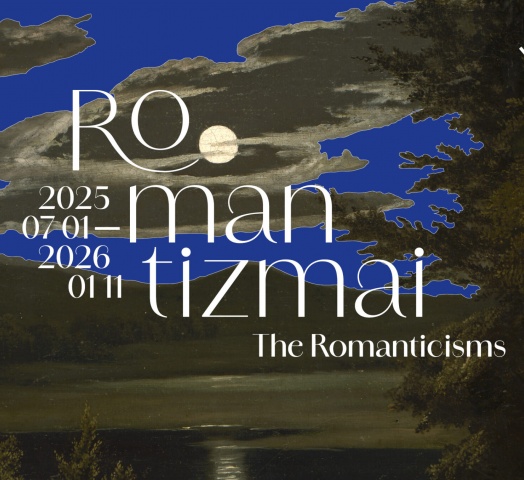
Emerging as a countermovement to the rationalism of Classicism, Romanticism swept across Europe as a new artistic and literary movement that opened up space for emotions, dreams, and individualism. The genius of the creator began to be boldly exalted, spiritual values were elevated above material ones, and those seeking moral support or inspiration were encouraged to look backwards, to a past stretching back centuries. In Lithuania, however, Romanticism ‘lingered’; rather than yielding to Realism, which was gaining prominence in the West during the second half of the 19th century, it transformed into Neo-romanticism, or National Romanticism, which inventively employed the expressive means of Symbolism, Art Nouveau, and other contemporary styles. Some artworks at the exhibition were loaned by TARTLE.
On June 6th the exhibition “Creative gene” was opened in Pakruojis for the 120th anniversary of the birth of one of the most prominent Lithuanian artists, Stasys Ušinskas. TARTLE has lent 9 artworks by Stasys Ušinskas for the exhibition.
Currently we are changing the exhibition. We will be open for visitors starting from June.
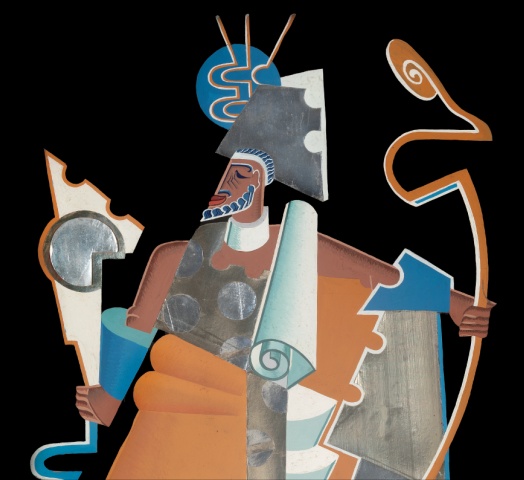
The exhibition ‘Stasys Ušinskas: The Iceberg of Lithuanian Modernism’ at the Museum of Applied Arts and Design.