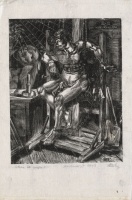


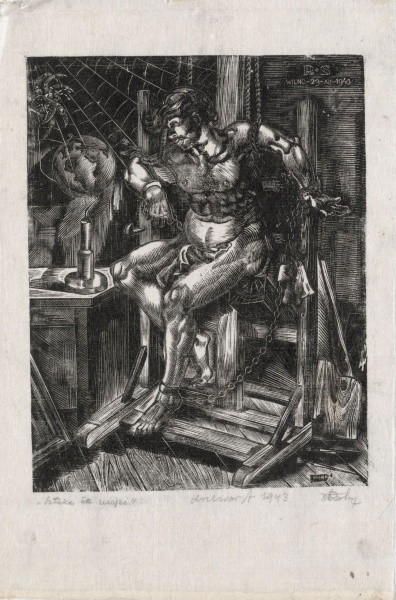

The Artist in Captivity
| Author: |
Stanisław Rolicz (1913–1997) |
| Created: | 1943 |
| Material: | paper |
| Technique: | copper engraving |
| Dimensions: | 25 × 16.60 cm |

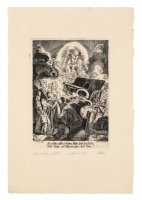
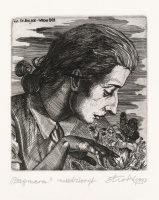
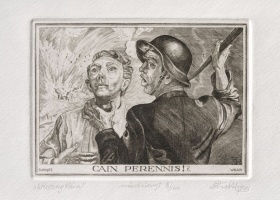
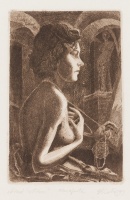
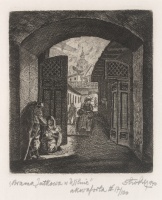
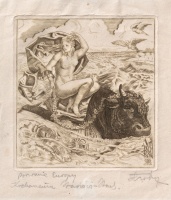
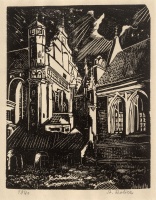
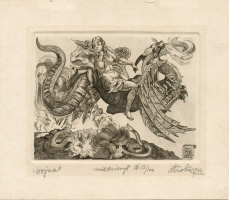
The most prolific period for Stanisław Rolicz (1913–1997), who began his studies in the Faculty of Art at Stephen Báthory University in the 1930s, and later pursued them in 1940 and 1941 at Vilnius Academy of Art, unfolded during the Nazi occupation. Paradoxically, although the Nazis forbade artists of Polish descent from participating in official art circles, this period was exceptionally productive for Rolicz. Despite the restrictions, he produced a significant body of work, exploring various themes in his woodcuts. In one composition, Rolicz pondered the artist’s calling, portraying Prometheus not bound to a cave, as is usually depicted in mythology, but to an easel. This portrayal seems to emphasise the enduring commitment of artists, including himself, to persevere in their calling in spite of adversity. Rolicz embodied this mission in his own actions, stepping up his creative output even while operating clandestinely under the Nazi regime. A series of his engravings from this period stand out by their expressive stylistics and overtly anti-war and anti-Nazi stance.
Text author Ieva Burbaitė