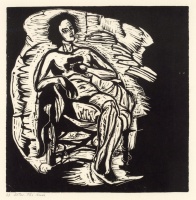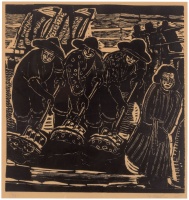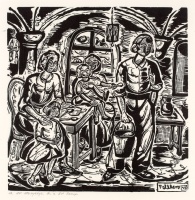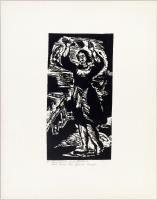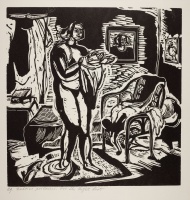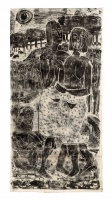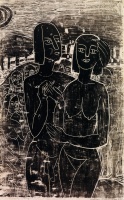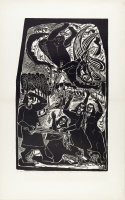


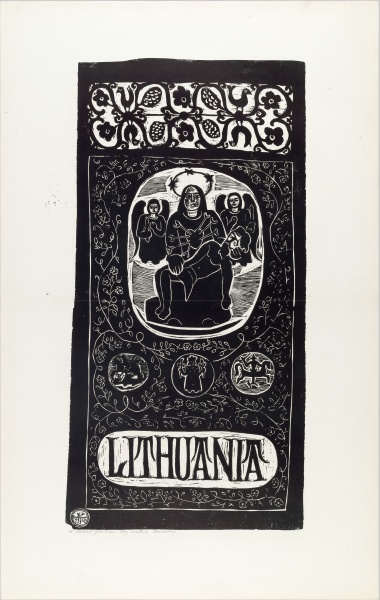

My Native Country (35). From the series ‘Linocuts by Viktoras A. Petravičius’, 1949
| Author: |
Viktoras Petravičius (1906–1989) |
| Created: | 1949 |
| Material: | paper |
| Technique: | linocut |
| Dimensions: | 48 × 38 cm |

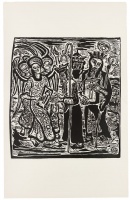
More than 70,000 residents of Lithuania fled to the West during the Second World War. The feelings of the displaced Lithuanians were captured poignantly in graphic works, particularly those that drew heavily on the influence of German Expressionism. The themes of pain, loss and uncertainty were expressed most dramatically in the prints of Viktoras Petravičius (1906–1989). His linocuts Call from the Baltic Coast and My Country’s Struggle for Freedom convey the horror of a land ravaged by occupation, the reign of dark forces, and the resolute determination of the resistance. In the emblematic work Lithuania, or My Native Country, which presents Lithuania to an international audience, Petravičius chose the Christian motif of the Pietà, Our Lady of Sorrows holding the body of her dead Son on her knees, as the central visual symbol of the suffering land. This image is complemented by three medallions against an ornamental background: the warrior Vytis and St George slaying the dragon, both symbolising the resolute struggle against evil, and St Casimir, the patron of Lithuania, representing the spiritual intercession. A folder of Petravičius’ work from the war years was published in Munich in 1949 in an edition of 300 copies. This bibliophile publication (No 108), signed by the artist himself, with an introduction in both Lithuanian and English, was prepared and printed in what was then the American occupation zone, thus establishing its place not only in European but also American art history.
Text author Laura Petrauskaitė
Source: Law firm Valiunas Ellex art album ARTISTS ON THE MOVE (2025). Compiler and text author Laura Petrauskaitė